

← All news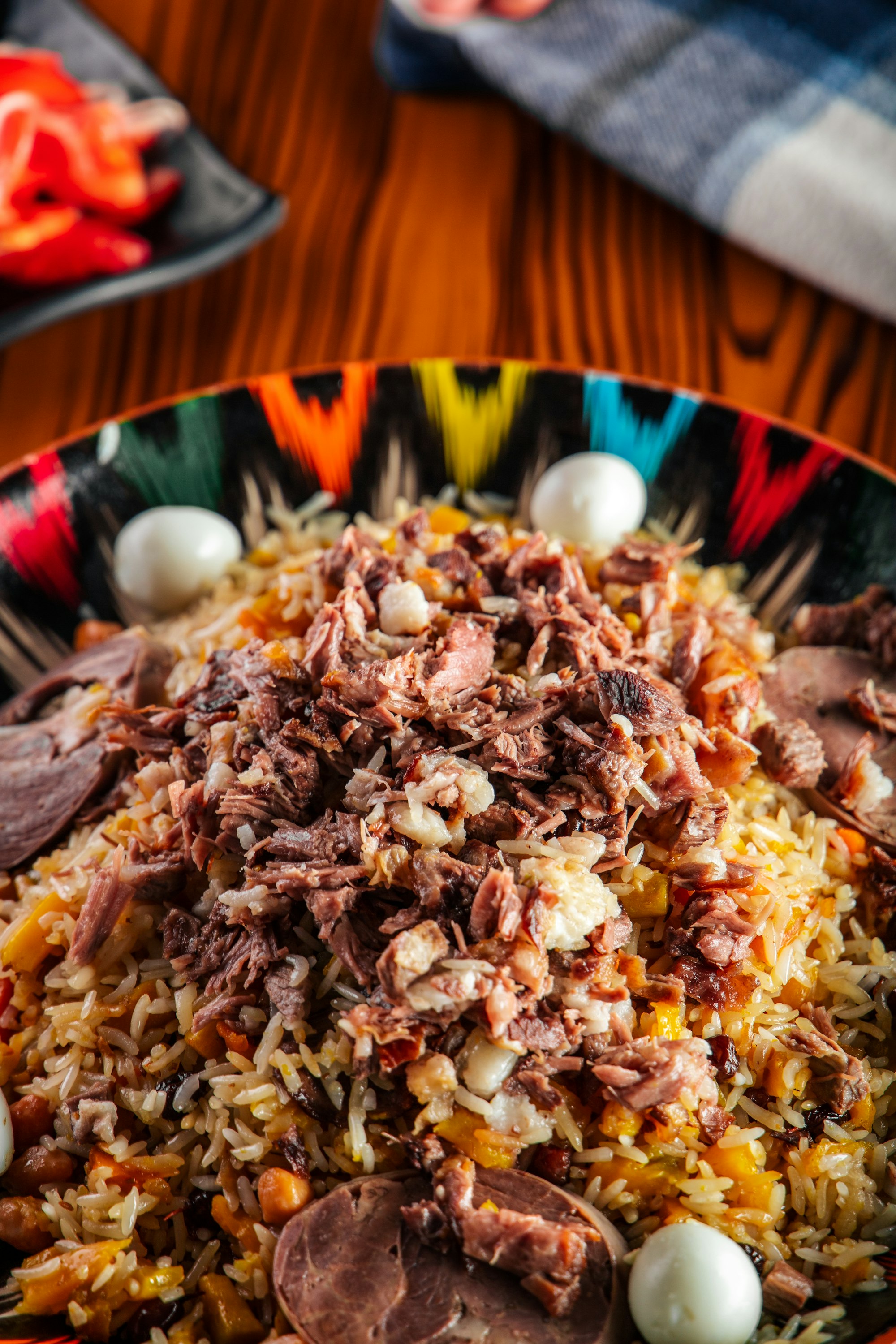
Plov: A Traveller's Guide to Uzbekistan's National Dish
Rice, carrots, lamb and a kazan over open fire. How plov is made, how it differs from city to city, and where to try it properly.
Rice, carrots, lamb and a kazan over open fire. How plov is made, how it differs from city to city, and where to try it properly.
No dish says Uzbekistan like plov. It is cooked for weddings and funerals, for Friday lunch and for welcoming guests. In 2016 UNESCO added the culture and tradition of palov to its list of intangible cultural heritage, and once you have eaten a good one, it is easy to see why.
Plov is cooked in a kazan, a heavy cast-iron cauldron, usually over a wood or gas fire. The master cook, the oshpaz, builds it in stages:
Every region claims the best plov. Tashkent wedding plov is rich and mixed together before serving. In Samarkand the layers are kept apart, with rice on the bottom and meat on top. Bukhara and Fergana have their own versions with different rice, spices and dried fruit. Comparing them is one of the pleasures of a longer journey.
Plov is a lunch dish. Big plov centres start cooking early in the morning and the best kazans are often finished by early afternoon. Plan your plov stop for midday.
We build plov into culinary journeys as a hands-on experience: shopping for carrots and rice at the bazaar, cooking with a local master and eating together in a courtyard. It works well for groups of all sizes and is one of the most requested elements of our food-focused programs.
Planning a program for your clients? We reply within one business day.
Request a proposal